10 Best Laminated Film Suppliers for Global Buyers

Time:2026-09-27 Author:Aria
0%

Laminated Film plays a quiet but critical role in packaging performance. A pouch may look simple on a store shelf, yet its layers must balance barrier protection, sealing, print quality, and machine compatibility. For global buyers, choosing a supplier is therefore more than comparing quotations. It means checking technical capability, production consistency, documentation, and communication across markets.

Industry data shows why supplier decisions matter. Grand View Research estimated the global flexible packaging market at USD 268.5 billion in 2023, with continued growth projected through 2030. The report covers flexible packaging broadly, not laminated film alone, so its figures should be read as market context rather than a direct measure of film demand. Still, it points to a large, evolving sector. Smithers’ packaging research also tracks changes in materials, formats, and end-use requirements—factors that can affect film specifications and sourcing plans.

Small details count. A seal that wrinkles on a filling line can waste an entire production run. A barrier value that looks suitable on paper may perform differently after printing, forming, or transport. Not every supplier makes these risks easy to assess. Buyers should request current technical data sheets, sample rolls, test conditions, and clear explanations of laminate structures. Certifications and references help, but they do not replace trials on the buyer’s own equipment.

This guide reviews 10 Laminated Film suppliers for global buyers. It focuses on product range, manufacturing reach, and practical sourcing considerations. No ranking can fit every application. The right choice depends on the product, process, and evidence available.
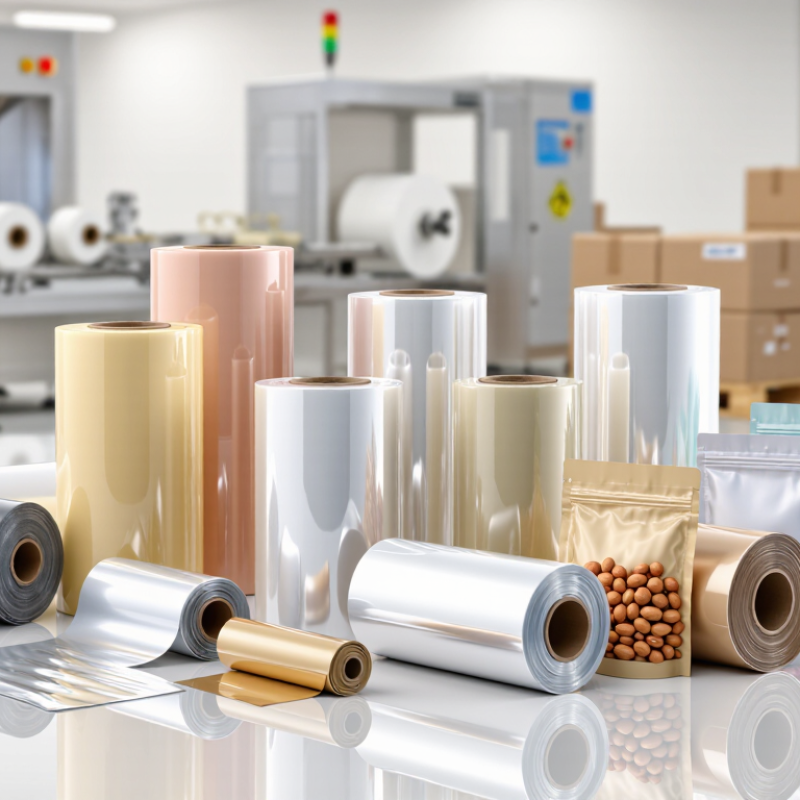
10 Best Laminated Film Suppliers for Global Buyers

Laminated Film Basics: Layer Structures, Materials, and Packaging Uses

Laminated film combines different layers to balance strength, barrier performance, sealing, and print quality. A typical snack pouch may use PET for stiffness and graphics, aluminum foil for light and oxygen protection, and PE for heat sealing. Some structures replace foil with EVOH when microwave visibility or lower metal content matters. The best design depends on the product, filling temperature, shelf-life target, and recycling route.

Market demand explains this engineering focus. Smithers’ The Future of Global Flexible Packaging to 2028 valued global flexible packaging at approximately US$291.9 billion in 2023. Plastics Europe’s Plastics—The Facts 2023 reported packaging as 39.3% of European plastics demand in 2022. These figures include more than laminated film, but they show packaging remains a major materials market. Buyers should examine oxygen transmission rate, water-vapor transmission rate, seal strength, and puncture resistance, not only thickness.

A three-layer structure is not automatically better. It can add cost and complicate recovery. I have seen specifications fail when laboratory barrier results ignored rough transport conditions or cold storage. Ask suppliers for test methods, production tolerances, adhesive details, and migration documentation. Real samples matter. A printed pouch that performs well on a clean test line may wrinkle, leak, or delaminate during high-speed filling. That gap deserves more attention.

Laminated Film Basics: Material Density by Layer Function

Laminated packaging films combine layers with different functions. Polyethylene and polypropylene are commonly used for heat-sealable inner layers, PET and nylon provide strength and dimensional stability, while aluminum foil delivers very high light, oxygen, and moisture barrier performance. The density values shown are typical material ranges expressed as midpoint values in g/cm³.

Barrier Performance Benchmarks: OTR (ASTM D3985) and WVTR (ASTM F1249)

For global buyers, laminated film quality is not defined by appearance alone. Its barrier data often determines whether coffee, powders, or medical components remain protected in transit. Oxygen transmission rate (OTR), tested under ASTM D3985, measures oxygen passing through film under controlled conditions. Water vapor transmission rate (WVTR), tested under ASTM F1249, measures moisture movement with a modulated infrared sensor. These results should be read together.

A credible supplier should provide reports showing test temperature, relative humidity, specimen thickness, conditioning time, and test area. Missing details weaken comparisons. A film with low OTR at 23°C may perform differently in a hot, humid container. Ask for the complete laminate structure. Adhesive layers, print coatings, sealant films, and pinholes can change the final barrier. Request samples from production lots, not only laboratory prototypes. Small details matter.

During sourcing, compare OTR and WVTR with the product’s sensitivity and planned shelf life. Do not reward the lowest number automatically. Extremely low readings may reflect a special structure or a test setup unlike your package. Independent verification can expose those gaps. A common failure is focusing on oxygen data while ignoring moisture pickup near the seal area. That is an avoidable blind spot. Supplier capability also includes thickness control, traceability, packaging, and action when results drift. No report is perfect. Review the method, repeat critical tests, and document assumptions before approving long-term supply.

How to Evaluate Suppliers: Film Thickness, Seal Strength, and Compliance

10 Best Laminated Film Suppliers for Global Buyers

How to Evaluate Suppliers: Film Thickness, Seal Strength, and Compliance

Choosing a laminated film supplier requires more than comparing prices. Smithers’ 2024 flexible packaging market study values the global sector at about US$147 billion in 2023. That scale increases competition, but quality still varies between production lines. Request thickness data from several roll locations, not one sample. A 70-micron film may still perform poorly if coating distribution is uneven. I have seen attractive samples fail after heat sealing. Small differences matter.

Seal strength should match the filling process, product weight, and storage conditions. Ask suppliers for ASTM F88 test results, including sealing temperature, pressure, dwell time, and peel direction. A reported value without test conditions is weak evidence. Also review ASTM D882 tensile results and complete migration documentation. For food-contact applications, verify applicable local requirements, such as European Union framework rules or United States food-contact regulations. Certificates alone are not enough. Check their issue dates and testing laboratories.

Tips: Request three production samples. Measure thickness at the edges and center. Test seals after refrigeration, stacking, and transport simulation. Ask for batch traceability and corrective-action records. Suppliers may resist sharing failures, but that response is informative. One overlooked question remains: can their compliance documents cover your destination market, not only their factory country?

10 Best Laminated Film Suppliers for Global Buyers: Company Profiles

Global buyers need more than a low quoted price when comparing laminated-film suppliers. Grand View Research estimated the global flexible-packaging market at USD 265.7 billion in 2023 and forecast 4.9% annual growth from 2024 to 2030. This is broad market context, not a laminated-film sales figure. Supplier profiles are best judged by verified specifications, sample performance, and delivery records—not market size alone.

The barrier-film converter focuses on moisture and oxygen control. The print-led supplier supports sharp graphics and color matching. The recyclable-structure specialist helps simplify material layers. The food-grade producer documents material traceability. The high-volume manufacturer offers repeatable roll dimensions. The short-run converter accommodates smaller trials. The regional supplier may reduce transit time. The technical partner assists with seal-strength testing. The custom-coating supplier adjusts surface properties. The export-focused converter handles packing and shipping documents. These are capability profiles, not a universal ranking.

Ask each candidate for a current technical data sheet and a production sample. Measure thickness, sealing behavior, and print consistency under your own line conditions. Check how defects are recorded and resolved. A polished sample is not proof of stable production. Even supplier claims need checking. One weakness in this comparison is that capabilities vary by plant, product, and order size; confirm the exact production site before qualification.

Comparing Suppliers by Capacity, Customization, Certifications, and Lead Time

10 Best Laminated Film Suppliers for Global Buyers

Comparing suppliers requires more than checking a production number. A large plant may offer stable output, yet smaller suppliers can provide faster sampling and closer communication. Ask for monthly capacity, backup equipment, and recent delivery records. These details reveal whether a supplier can handle seasonal demand without sacrificing thickness, sealing strength, or print quality.

Customization should cover film structure, barrier performance, roll width, artwork, and packing format. Experienced suppliers explain trade-offs clearly. For example, a stronger moisture barrier may increase cost or reduce recyclability. Request samples that match your actual filling line. Certifications also need careful review. Check ISO 9001, food-contact documentation, migration test reports, and relevant regional compliance. Verify certificate scope and expiration dates. A logo alone proves little.

Tips: Compare quoted lead times with sample approval, tooling, and shipping schedules. Ask for a written timeline. Confirm how delays are reported and corrected. A reliable supplier should identify risks before accepting the order. Lead times of 15 to 30 days may sound attractive, but raw material shortages can change them quickly. I have seen promising quotations fail because artwork approval was ignored. That mistake is easy to repeat. Build a small buffer, and keep technical specifications in one signed document.

10 Best Laminated Film Suppliers for Global Buyers — Comparing Suppliers by Capacity, Customization, Certifications, and Lead Time

Anonymous supplier profiles below represent common laminated-film manufacturing specialties, not verified or ranked company records. Capacity fit is qualitative; lead times are indicative planning ranges and vary by specification, order size, printing, material availability, and destination. Confirm actual production capacity, certificates, compliance documents, and delivery dates directly with each supplier.

Supplier Profile Capacity Fit Typical Customization Certifications & Documents to Verify Indicative Lead Time Best Fit for Global Buyers
1. High-Volume Flexible Packaging Converter High-volume programs; request rated monthly output by structure and line. Printed rollstock, multi-layer structures, pouch conversion, repeat production. Current ISO 9001 certificate; food-contact declarations where applicable; audit and traceability records. Repeat orders: approximately 3–6 weeks; new specifications may take longer. Buyers seeking consolidated production and recurring large orders.
2. Barrier-Film Specialist Medium to high, depending on barrier material and converting equipment. Structures using materials such as PET, PE, PA, metallized films, or aluminum foil. Food-contact documentation for the intended market and application; barrier test methods and results. Approximately 4–8 weeks for customized structures; confirm material availability. Products needing moisture, oxygen, aroma, or light protection.
3. Retort Packaging Converter Specialized capacity; confirm retort-compatible line capability and qualification slots. Heat-resistant laminates and pouch formats designed for the buyer’s specified process. Food-contact declarations; documented retort testing against the buyer’s process conditions; quality-system records. Approximately 6–12 weeks for new structures or validation; repeat orders may be shorter. Shelf-stable foods requiring process-specific packaging validation.
4. Digital-Print Flexible Packaging Supplier Well suited to short and medium runs; confirm maximum web width and order limits. Multiple designs, short-run artwork changes, printed rollstock, and selected pouch formats. Current quality-system certificate; ink and packaging compliance documentation for the target market. Approximately 2–5 weeks after artwork approval, depending on materials and finishing. Product launches, market tests, and buyers needing lower-volume design variations.
5. Rotogravure Printing Converter Best suited to sustained medium and large runs; confirm cylinder capacity and setup schedule. High-volume graphics, color matching, repeat artwork, and multi-layer lamination. Current ISO 9001 certificate; documented color-control procedures; applicable food-contact records. Approximately 5–9 weeks for new artwork and setup; repeat orders can be faster. Established brands and importers with stable, repeatable demand.
6. Recyclable-Structure Film Converter Growing specialty capacity; confirm commercial-scale availability of the requested structure. Mono-material or design-for-recycling options, subject to performance and equipment requirements. Structure-specific recyclability evidence; technical data sheets; market-specific food-contact documentation where applicable. Approximately 4–10 weeks for development and trials; production timing depends on qualification. Buyers evaluating packaging redesign and recyclability targets.
7. Small-Batch Pouch Converter Low to medium volume; ask for minimum order quantities by pouch style and film structure. Stand-up, flat, and selected shaped pouches; limited-run printing and sampling. Quality-system documentation; material declarations; seal-integrity and product-specific test records. Approximately 2–6 weeks for standard formats; custom tooling or structures add time. Startups, regional brands, and buyers testing new products.
8. Industrial and Non-Food Laminator Capacity varies by material width, thickness, adhesive system, and finishing requirements. Protective, insulation, construction, and other technical laminates. Relevant technical data sheets, safety documentation, performance test reports, and quality-system records. Approximately 3–8 weeks, depending on specification and raw-material sourcing. Industrial buyers whose requirements are not primarily food-contact packaging.
9. Regional Export-Focused Converter Often flexible across medium-sized orders; verify actual line capacity and export allocation. Printed or unprinted films, common laminate structures, and export packing options. Current certificates validated with the issuing body; export documentation; traceability and inspection records. Approximately 4–8 weeks, plus transit and customs time. Importers comparing regional sourcing, shipping routes, and landed cost.
10. Custom-Development Packaging Partner Development capacity is project-dependent; request a written trial and scale-up plan. Material trials, new laminate combinations, performance optimization, and custom conversion. Documented test protocols, material specifications, change-control procedures, and applicable compliance records. Approximately 6–12 weeks or more for development, testing, and first production. Buyers with technically demanding applications or products requiring a new structure.

FAQS

Why should buyers compare more than the quoted film price?

A low price may hide unstable thickness or weak seals. Check sample performance, delivery records, and technical support. Cheap is not always efficient.

How should film thickness be checked?

Request data from several roll locations. Measure the edges and center of three production samples. A 70-micron film can still perform poorly when coating distribution varies.

What seal-strength information should a supplier provide?

Ask for test results with temperature, pressure, dwell time, and peel direction. Test seals after refrigeration, stacking, and transport simulation. A number without conditions is weak evidence.

Which product tests are useful during supplier evaluation?

Review tensile strength and seal-strength results. Test samples on your actual filling line. Packaging behavior may change with machine speed and product weight.

How can buyers verify compliance documents?

Check document scope, issue dates, expiration dates, and testing laboratories. Confirm coverage for the destination market. A certificate alone proves little.

What should buyers ask about production capacity?

Request monthly capacity, backup equipment, and recent delivery records. Ask whether seasonal demand affects quality or lead time. A large plant is not automatically more reliable.

What customization details should be confirmed?

Confirm film structure, barrier performance, roll width, artwork, and packing format. A stronger moisture barrier may increase cost or reduce recyclability. Trade-offs need written approval.

How can buyers control lead-time risks?

Request a written timeline covering sampling, artwork approval, tooling, and shipping. Keep technical specifications in one signed document. Add a small buffer. Delays still happen.

Conclusion

This guide introduces Laminated Film by explaining its basic layer structures, common material combinations, and practical uses in food, medical, industrial, and consumer packaging. It also explains how barrier performance is assessed through oxygen transmission rate (OTR) under ASTM D3985 and water vapor transmission rate (WVTR) under ASTM F1249. These measurements help buyers select films that provide suitable protection against oxygen, moisture, light, and external contamination.

The article then outlines key supplier evaluation criteria, including film thickness, seal strength, printability, material consistency, regulatory compliance, and technical support. A comparison of ten leading supplier profiles focuses on production capacity, customization options, certifications, quality control, minimum order requirements, and lead times. By reviewing these factors together, global buyers can compare suppliers more effectively, reduce sourcing risks, and choose Laminated Film solutions that match their packaging performance, application, and delivery requirements.


Aria

Aria

Aria is a dedicated marketing professional with a deep passion for innovative strategies and a keen understanding of our company's product offerings. With a wealth of experience in the industry, Aria excels at crafting engaging content that highlights the unique features and benefits of our......