Global Bopp Film purchasing is no longer a simple price comparison. Buyers must examine clarity, tensile strength, sealability, thickness tolerance, print performance, and supply reliability. A 20-micron roll may look economical, yet unstable gauge can create wrinkles, waste, and rejected packaging on a fast converting line.
Smithers’ The Future of BOPP Films to 2028 identifies flexible packaging, labels, and recyclable structures as important demand drivers. Mordor Intelligence also reports continued market growth, supported by food packaging and rising retail distribution. Forecasts differ slightly. That matters. Buyers should test the assumptions behind every supplier claim.
BOPP specialist Dr. S. K. Nandi offers a practical reminder: “Film performance begins with consistent raw-material quality and process control.” His point is highly relevant when comparing overseas quotations. Ask for recent technical data, coating details, certificate records, and production samples. Check whether the sample survives your real conditions: hot filling, cold storage, moisture, friction, and high-speed printing.
Not every low-cost roll is a bargain. A bright sample can hide poor slip stability. A familiar supplier can still miss a shipment. This guide, “10 Bopp Film Buying Tips for Global Buyers,” examines specification matching, supplier audits, documentation, logistics, sustainability claims, and total landed cost. It also considers an uncomfortable issue: buyers sometimes request premium performance without defining measurable acceptance limits. That gap invites disputes. Clear tests, realistic tolerances, and documented communication create a safer purchasing decision.
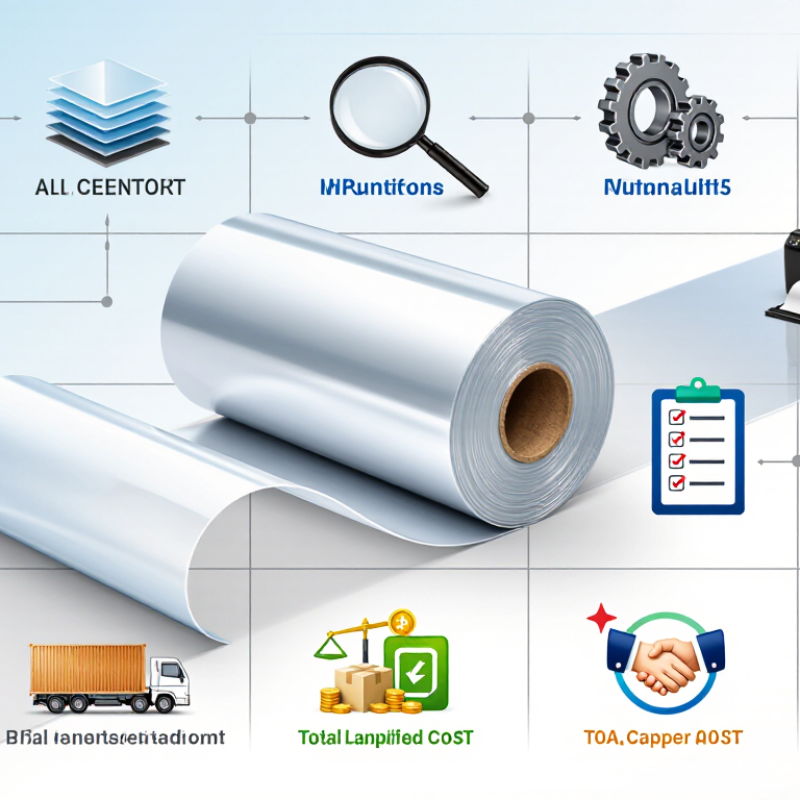
10 Bopp Film Buying Tips for Global Buyers?
Understanding BOPP Film Types, Properties, and Applications
BOPP film is not one universal material. Plain film suits lamination, labels, and stationery, while heat-sealable grades support fast packaging lines. Metallized film improves light and oxygen protection, but it can complicate recycling and sealing. Cavitated film feels thicker without matching solid-film weight. Matte grades reduce glare and create a softer shelf appearance. Choose the structure after defining the application.
Check thickness, tensile strength, elongation, haze, gloss, and coefficient of friction. These figures affect feeding, printing, and package appearance. For sealing, confirm seal initiation temperature and hot tack performance. A film may seal well in laboratory tests yet fail on a faster machine. Ask for recent technical data and independent test samples. Measure roll width, winding quality, core size, and splice control too. Small details matter.
Surface treatment also deserves attention. Corona-treated film improves ink or adhesive bonding, but treatment can decline during storage. Keep rolls dry, clean, and away from direct heat. I have seen buyers focus on price and overlook storage conditions. That mistake becomes expensive later. Request samples from different production lots, not only one attractive roll. No film is perfect. A practical trial should include the real ink, adhesive, machine speed, and sealing temperature. Record results carefully, then question any specification that seems unusually generous.
Understanding BOPP film types, properties, and applications helps buyers select the right structure, thickness, and performance level for packaging, labels, tape, and barrier applications.
The chart shows indicative commercial thickness ranges for common BOPP film applications. Actual specifications vary according to sealability, coating, printing, barrier requirements, converting process, and end-use regulations.
Global buyers should assess BOPP suppliers beyond attractive samples. Grand View Research valued the global BOPP films market at about USD 27.9 billion in 2023. Its report forecasts a 6.1% compound annual growth rate through 2030. This growth increases pressure on film quality and delivery reliability. Request recent COAs, thickness records, haze results, tensile data, and seal-strength tests. Compare results across several production lots, not one perfect roll. A glossy sample can mislead.
Tip: Audit the factory, not only the certificate. Check whether ISO 9001 covers the actual film site and product scope. Review calibration records, nonconformance logs, operator training, and traceability procedures. For food-contact applications, verify current compliance documents for every layer, ink, and adhesive. Independent laboratory testing adds confidence, especially when supplier reports look unusually clean. I have seen buyers accept expired documents. That mistake is avoidable.
Production capacity needs practical evidence. Ask for monthly output, line width, coating capability, maintenance schedules, and average utilization. Smithers’ flexible packaging outlook identifies continued demand for lightweight films, but high demand can also create allocation risks. Confirm backup lines and resin-sourcing plans. Request a twelve-month delivery record, including delayed orders. A supplier may claim 10,000 tonnes annually, yet available capacity could be much lower during peak periods. Define acceptable variation in thickness, roll length, winding, and core dimensions before signing. Recheck assumptions. They change.
| No. | Buying Dimension | What to Evaluate | Typical Technical Reference | Verification Method | Buyer Action |
|---|---|---|---|---|---|
| 1 | Film Structure and Grade | Confirm whether the film is intended for plain packaging, printing, lamination, labeling, overwrapping, or metallizing. | Common structures include transparent, white opaque, cavitated, matte, pearlized, heat-sealable, and metallizable BOPP films. | Review the technical data sheet, application guide, and approved product specification. | Match the grade to the final packaging process before requesting a quotation. |
| 2 | Thickness Uniformity | Evaluate nominal thickness, tolerance, cross-web uniformity, and consistency between production lots. | Commercial packaging grades commonly range from approximately 12 to 50 micrometres, depending on the application. | Request thickness profiles, test reports, and retained sample comparisons from several lots. | Set measurable thickness tolerances in the purchase specification. |
| 3 | Mechanical Performance | Check tensile strength, elongation, tear resistance, puncture resistance, and stiffness in both machine and transverse directions. | Values vary substantially by grade and orientation; machine-direction and transverse-direction results should be reported separately. | Compare laboratory reports using recognized methods such as ASTM D882 or ISO 527-3, where applicable. | Approve samples only after testing them on the intended packaging equipment. |
| 4 | Optical and Surface Properties | Assess haze, gloss, transparency, whiteness, surface treatment, coefficient of friction, and appearance defects. | Surface quality should be consistent across the roll, with no blocking, gels, streaks, wrinkles, or excessive telescoping. | Request test data for haze, gloss, and coefficient of friction, plus visual inspection under controlled lighting. | Define acceptable limits for appearance and optical performance in writing. |
| 5 | Printing and Adhesion Suitability | Verify corona treatment level, dyne retention, ink adhesion, coating compatibility, and printability after storage. | Many treated films are supplied at a target surface energy commonly around 38 to 42 dynes/cm, subject to the ink and process used. | Use dyne pens or solutions, tape adhesion tests, ink rub tests, and an actual press trial. | Do not rely on an initial dyne reading alone; confirm treatment retention over time. |
| 6 | Sealing and Lamination Performance | Evaluate seal initiation temperature, hot-tack behavior, seal strength, bond strength, and resistance to delamination. | Required performance depends on sealing equipment, sealant layer, adhesive system, filling temperature, and package design. | Request seal-strength curves, hot-tack results, and lamination trial data using the buyer's process conditions. | Specify test temperature, dwell time, pressure, and test direction to make results comparable. |
| 7 | Food-Contact and Regulatory Compliance | Confirm suitability for the destination market and the intended food or non-food application. | Depending on the market, documentation may reference applicable requirements such as FDA regulations, EU food-contact rules, or other local legislation. | Obtain a current declaration of compliance, migration test reports, material composition information, and change-control records. | Check that certificates cover the exact film grade, thickness range, and intended use. |
| 8 | Quality Management and Traceability | Assess documented quality procedures, calibration controls, nonconformance handling, complaint response, and lot traceability. | A manufacturing quality system certified to ISO 9001 is a useful baseline, but certification does not replace product testing. | Review valid certificates, sample batch records, certificate-of-analysis formats, and audit responses. | Require roll numbers, production dates, test results, and retention-sample policies on shipping documents. |
| 9 | Production Capacity and Continuity | Evaluate annual capacity, line width, number of production lines, operating schedule, maintenance planning, and backup capability. | Capacity should be assessed against the buyer's monthly demand, peak-season requirements, lead time, and minimum order quantity. | Request a capacity statement, typical utilization range, lead-time history, and continuity or contingency plan. | Separate installed capacity from available capacity; high utilization can affect delivery reliability. |
| 10 | Packaging, Logistics, and Commercial Terms | Check roll dimensions, winding direction, core specifications, palletization, moisture protection, labeling, Incoterms, and claim procedures. | Roll length and weight depend on thickness, width, density, core diameter, and maximum permitted roll diameter. | Approve a packaging drawing and inspect loading photographs or pre-shipment records when appropriate. | Use a written quality agreement covering tolerances, inspection, claims, replacement, and delivery responsibilities. |
10 Bopp Film Buying Tips for Global Buyers
Comparing Film Specifications, Pricing, and Total Purchase Costs
BOPP film buying should begin with the application, not the quoted price. Check thickness, width, roll length, tensile strength, haze, gloss, corona treatment, and sealing performance. A 20-micron film may cost less per roll, yet create higher waste if stiffness is unsuitable. Ask for recent technical data sheets and production samples. Test them on your actual packaging line.
Mordor Intelligence estimates the global BOPP films market at about USD 21.37 billion in 2025, with projected growth to USD 27.89 billion by 2030. This demand can influence resin costs, lead times, and supplier capacity. However, market forecasts differ. Treat them as planning references, not guaranteed prices. Request quotations using the same basis, such as FOB, CIF, or delivered cost. Include film price, freight, insurance, duties, storage, inspection, and payment charges. Small details matter.
Total purchase cost also includes trim waste, rejected rolls, slitting fees, and line adjustments. ICIS price commentary can help buyers monitor polypropylene movement before contract discussions. In my purchasing experience, the cheapest quotation often hides inconsistent winding or weak packaging. That is expensive. Compare cost per usable square meter, not cost per kilogram alone. A practical scorecard should weigh specification compliance, batch consistency, delivery reliability, documentation, and technical support. Some assumptions will be wrong. Recheck them after the first shipment.
Global BOPP film buying depends on more than price per kilogram. UNCTAD’s Review of Maritime Transport reports that ships carry over 80% of global merchandise trade by volume. That scale does not guarantee stable delivery. Ask suppliers for the loading port, vessel schedule, transshipment route, and container plan. Confirm whether rolls travel in sealed cartons, moisture-resistant wrapping, and reinforced pallets. A damaged core can ruin an otherwise acceptable shipment.
Lead times should include production, quality inspection, booking, port handling, and customs clearance. Request a written timeline with separate dates for film completion and vessel departure. The World Bank’s Logistics Performance Index 2023 shows that customs, tracking, infrastructure, and timeliness differ widely between markets. Therefore, a supplier’s factory lead time is only one part of the purchasing decision. I usually add a practical buffer for port congestion and public holidays. It feels cautious, but perfect forecasts are fiction.
Trade terms must match the buyer’s actual logistics capability. Under ICC Incoterms 2020, terms such as FOB, CIF, and DDP assign different costs, risks, insurance duties, and customs responsibilities. Compare the full landed cost, not only the quoted film price. Confirm roll width, thickness tolerance, winding direction, pallet limits, and packaging photographs before payment. A small wording gap can become an expensive dispute. Also request batch records and a pre-shipment inspection. This step is sometimes skipped. That is a mistake worth reconsidering.
A reliable BOPP film purchase starts with a useful sample, not a glossy brochure. Request a production sample with the exact thickness, width, surface treatment, and core size. Test it on your own laminator or printing line.
Small details matter. Check haze, gloss, tensile strength, seal performance, and coefficient of friction. Record the machine speed and temperature during testing. Results can change between laboratories and factories. That is easy to forget.
Your contract should describe measurable specifications, acceptable tolerances, packing details, delivery dates, inspection methods, and claim procedures. Include the approved sample code and revision date. Ask for batch records and a certificate of analysis for every shipment. Keep records.
A vague quality promise offers little protection when rolls arrive with telescoping, wrinkles, blocked layers, or uneven edges. Payment terms should also match inspection and acceptance steps.
Quality control should continue after shipment. Inspect outer packaging, labels, roll length, and moisture protection when the cargo arrives. Photograph damage before unloading. Build a simple incoming inspection plan for thickness, width, appearance, and treatment level.
After-sales support matters when a roll fails during production. The supplier should respond with a technical contact, investigation timeline, replacement policy, and corrective-action report. No process is perfect. A missed measurement or delayed reply can reveal weaknesses in your own purchasing system too. Reflect, adjust, and keep the evidence.
Choose plain film for lamination, labels, or stationery. Heat-sealable film suits fast packaging lines. Metallized film improves light and oxygen protection. However, it may complicate recycling and sealing. Define the application first.
Check thickness, tensile strength, elongation, haze, gloss, and coefficient of friction. These values affect feeding, printing, and appearance. For sealing, confirm seal initiation temperature and hot tack. A laboratory result may not match a fast machine.
Test the film with your actual ink, adhesive, machine speed, and sealing temperature. Record every setting carefully. Watch for wrinkles, slipping, weak seals, or feeding interruptions. Real production exposes problems quickly.
Request the exact thickness, width, surface treatment, and core size. Use a production sample rather than a glossy brochure. Test it on your own line. One attractive roll proves very little.
Store rolls in a dry, clean area away from direct heat. Corona treatment can decline during storage. Protect the rolls from moisture and contamination. Storage is easy to overlook.
Specify measurable properties, acceptable tolerances, packing, delivery dates, inspection methods, and claim procedures. Include the approved sample code and revision date. Request batch records and a certificate of analysis for each shipment. Vague promises create avoidable disputes.
Inspect packaging, labels, roll length, moisture protection, and visible damage. Look for telescoping, wrinkles, blocked layers, and uneven edges. Photograph damage before unloading. Keep the evidence.
Request a technical contact, investigation timeline, replacement policy, and corrective-action report. Share machine settings, photographs, and test results. Review your own inspection process too. One missed measurement may reveal a purchasing weakness.
Buying Bopp Film for international packaging projects requires more than comparing quoted prices. Start by identifying the correct film type, thickness, surface treatment, clarity, strength, sealability, and intended application. Then evaluate suppliers through production capacity, quality certifications, testing procedures, and consistency across batches. Compare technical specifications carefully, including roll dimensions, tolerances, printability, and performance requirements, while calculating the total purchase cost with tooling, transportation, duties, insurance, and potential waste.
Global buyers should also review packaging standards, shipping methods, lead times, payment conditions, and trade terms before placing an order. Request representative samples and test them under actual production conditions. A clear contract should define specifications, inspection methods, acceptable quality limits, delivery schedules, and procedures for handling claims. Reliable after-sales support is equally important, especially when resolving quality issues or planning repeat orders. By following these steps, buyers can reduce risk, control costs, and establish a stable supply of Bopp Film for long-term business needs.

TIANCHEN PRINTING