Engineered structural barrier films, high-precision sealing components, and customizable dimensions optimized for modern high-speed automated packaging lines.
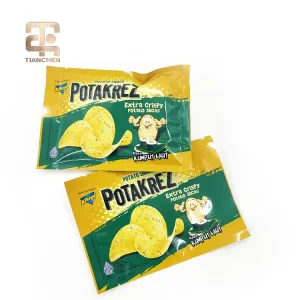
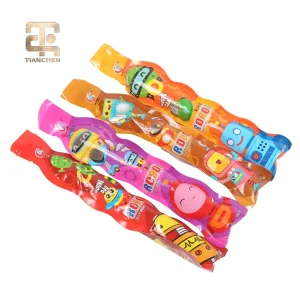
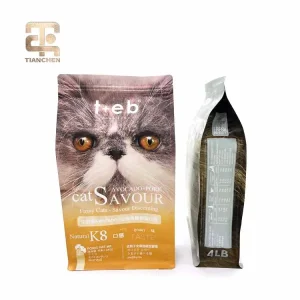
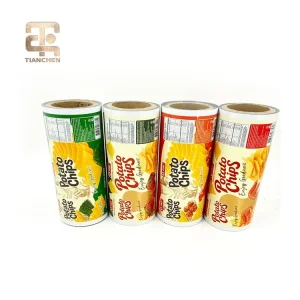
Years Industrial Experience
Food-Grade Materials
Advanced Production Lines
Global Export Destination Countries
As a global leader in flexible packaging engineering, Guangdong Tianchen Printing Co., Ltd. represents the standard of premium ODM and OEM manufacturing. With over two decades of dedicated industrial presence, our organization specializes in delivering bespoke high-barrier laminated rolls, pre-formed standing pouches, and complex technical sealants.
Strategically nested in Guangdong Province—the absolute epicenter of global advanced manufacturing and container trade networks—we harness fully integrated workflows. From raw polymer extrusions and computer-controlled rotogravure printing to high-speed dry and solvent-free laminations, our operations are optimized to streamline global supply chains, minimize product transit spoilage, and heighten retail brand visibility.
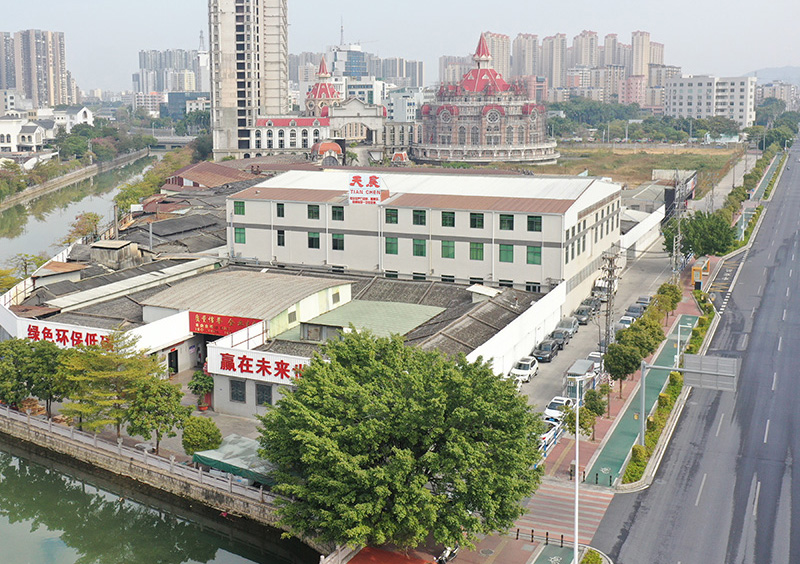
Driving continuous improvement and shaping the global future of flexible packaging systems through technology, integration, and eco-design.
We systematically channel corporate capital into functional polymer R&D. By developing monomaterial structures, advanced bio-resins, and ultra-high barrier films, we keep our partners at the absolute vanguard of packaging technology.
To align with global markets, we standardize all management structures under rigorous ISO, FDA, and BRCGS benchmarks. Our global service grid facilitates frictionless communication, compliance validation, and international logistics.
Our turnkey business model consolidates packaging design, film extrusion, multi-layer lamination, precision converting, and automated QC inspection. Vertical integration shortens product lead times and optimizes cost efficiency.
We integrate digital management frameworks with physical machinery. With inline vision inspection systems, spectrophotometers, and real-time ERP/MES tracing, we ensure high quality across production runs.
An authoritative review of material engineering, sustainability mandates, and the shift toward monomaterial structures.
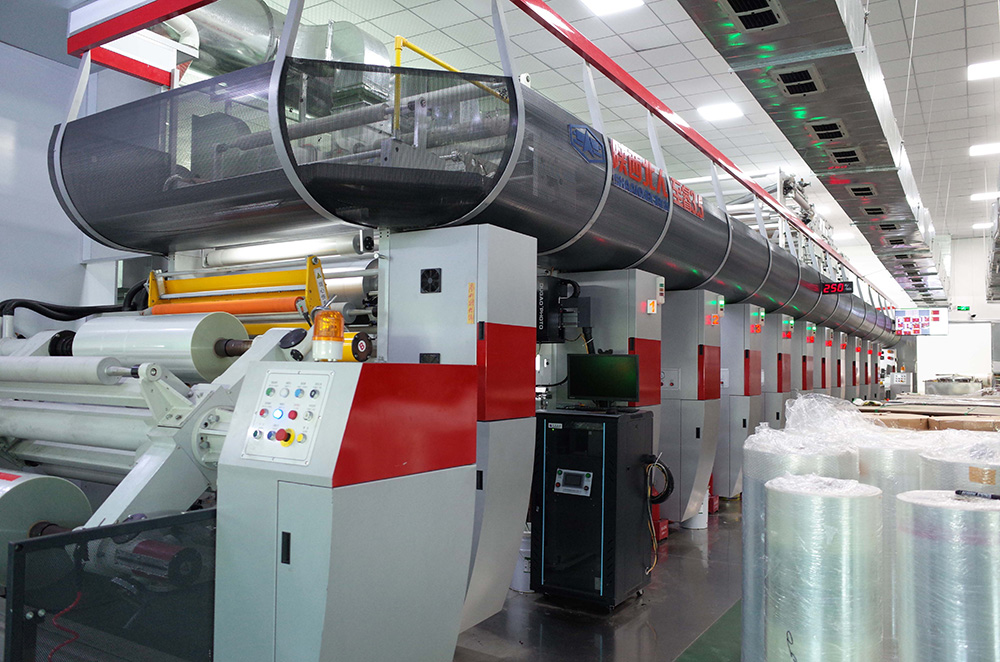
The global consumer packaged goods (CPG) space is experiencing a structural migration away from traditional rigid glass, metal, and heavy PET containers toward lightweight, high-barrier flexible pouches. This movement is driven by two main factors: **freight optimization** and **carbon lifecycle mitigation**.
Flexible pouches require up to 70% less plastic than equivalent rigid counterparts. From a logistics perspective, unfilled flat pouches occupy approximately 90% less warehouse space and shipping container capacity compared to rigid containers. This leads to lower transport-related emissions and reduced freight costs for buyers.
Furthermore, advances in lamination allow flexible structures to match the barrier performance of glass and metal. By combining high-performance polymers (PET, Nylon, EVOH, and PP), manufacturers create packaging that guards against oxygen, moisture, and light, keeping products fresh throughout their shelf lives.
As environmental regulations tighten globally—including the European Union's Packaging and Packaging Waste Regulation (PPWR) and extended producer responsibility (EPR) laws in North America—the flexible packaging market is shifting away from traditional mixed-material laminations. Historically, combining PET, Aluminum foil, and PE resulted in reliable barrier properties but rendered the packaging difficult to recycle in standard municipal systems.
Guangdong Tianchen Printing is helping drive the transition to **recyclable monomaterial structures**. By utilizing advanced MDO-PE (Machine Direction Oriented Polyethylene) laminated to low-density polyethylene (PE/PE), or oriented polypropylene (OPP/CPP) matrices, we deliver pouches that can be integrated directly into existing polyolefin recycling streams. These monomaterial structures maintain high tensile strength and thermal sealing integrity on automated lines, meeting both corporate ESG mandates and regional waste regulations.
"The future of packaging sustainability lies in polymer engineering. By aligning seal temperatures, cooling times, and coefficient of friction (COF) parameters of monomaterial PE films, we provide solutions that run smoothly on high-speed filling equipment without sacrificing barrier performance."
Leveraging high-speed automation, raw material access, and advanced lamination technology to mitigate global market volatility.
In an era marked by volatile shipping lanes and fluctuating raw material costs, supply chain resilience is essential for global procurement teams. Guangdong Tianchen Printing helps secure client operations by maintaining deep integration with key polymer and chemical suppliers throughout southern China's manufacturing clusters.
Our factory leverages advanced planning systems to buffer raw material reserves. This shielding mitigates price swings in raw PE, PP, PET, and aluminum foils. Our operations remain highly agile, allowing us to pivot material formulations based on global supply fluctuations, regulatory updates, and client specifications without extending lead times.
By combining raw material access with automated, high-output production, we provide overseas buyers with consistent lead times and reliable pricing structures, ensuring predictable operations in uncertain market environments.
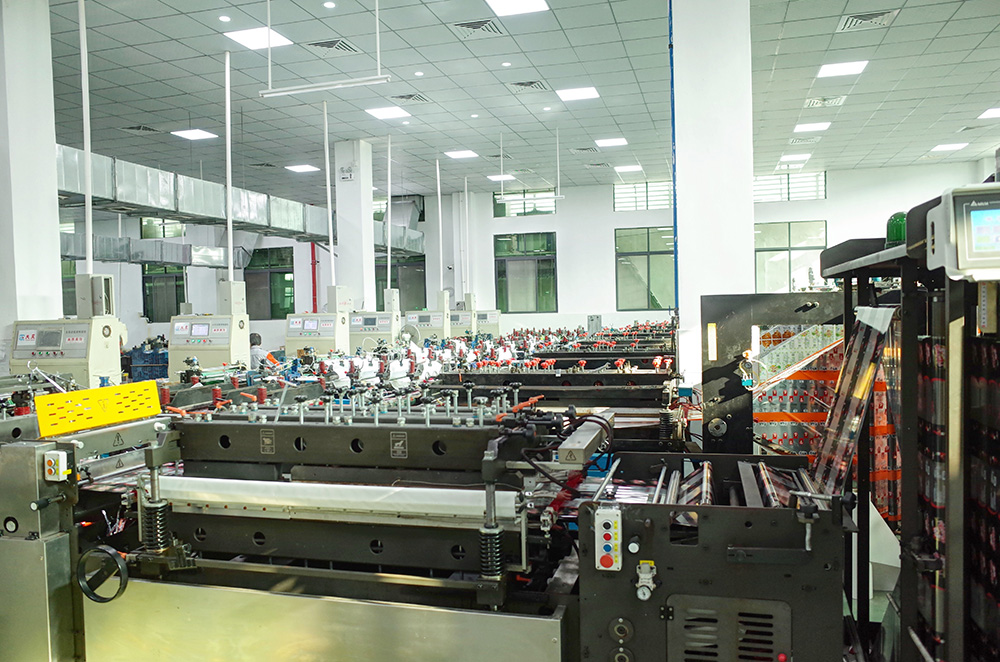
At the core of our printing capabilities is computer-controlled rotogravure technology. Unlike flexographic or digital printing methods, gravure printing uses engraved metal cylinders that deliver high color density and detail over large-volume production runs. This makes it ideal for complex designs, micro-text, and security markings.
Our lines feature automatic register control systems that continually scan and adjust tension on running webs. This limits deviations to within ±0.1mm. High precision ensures that complex graphics, barcode structures, and text remain sharp and legible. It also supports consistent branding across multiple product variants.
Additionally, our solvent-free lamination processes reduce residual solvent levels to near-zero. This complies with food safety regulations in regions such as the United States (FDA), Europe (EC), and Japan, ensuring that no unwanted odors or chemicals migrate into packaged products.
Custom-engineered laminations and pouch architectures tailored to the performance demands of global product categories.
We produce high-barrier retort pouches that withstand sterilization temperatures of 121°C for up to 45 minutes. Utilizing PET/AL/Nylon/RCPP laminated structures, these pouches provide excellent protection against oxygen and moisture transmission, helping extend the shelf life of baby food, ready-to-eat meals, and wet pet foods without refrigeration.
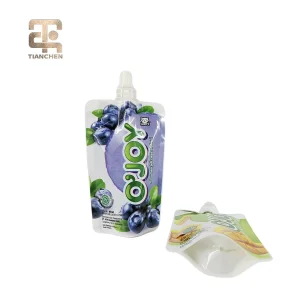
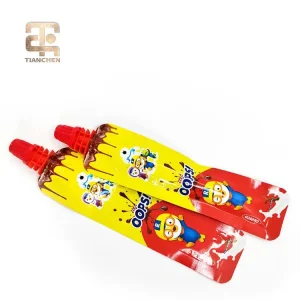
Designed for liquid detergents, infant nutrition, juices, and alcohol, our spouted pouches are engineered to handle high drop impacts and mechanical stresses. We use custom sealant resins that resist stress-cracking, preventing leaks at the spout interface. Ergonomic die-cut handles and shaped designs improve brand presence on retail shelves.
For daily personal care products, face masks, shampoos, and agricultural chemicals, we engineer barrier films that resist chemical migration. Utilizing PET, PVDC, and specialized heat-resistant sealants, our pouches prevent active ingredients, organic oils, and fragrances from interacting with and degrading the packaging structure.
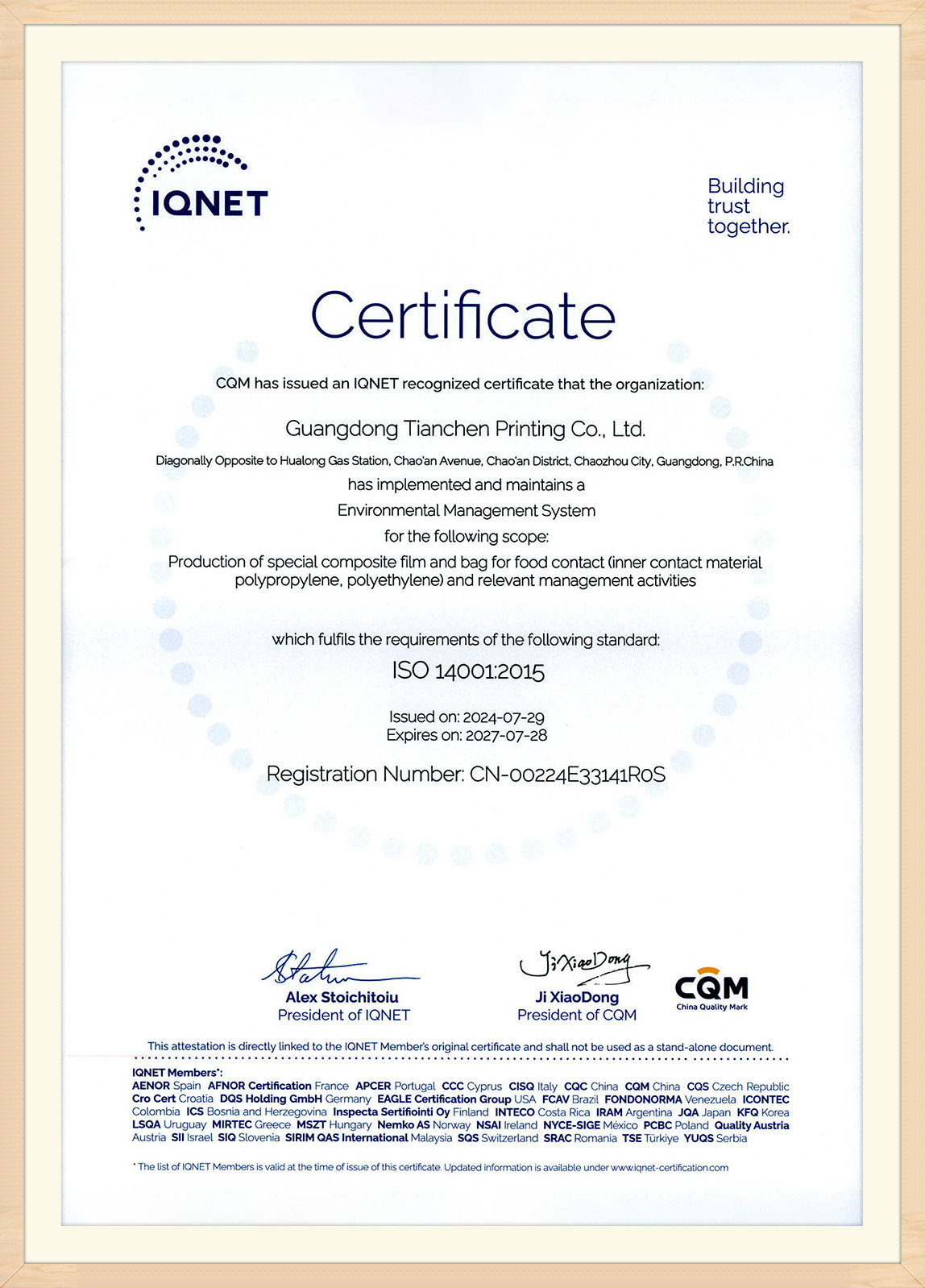
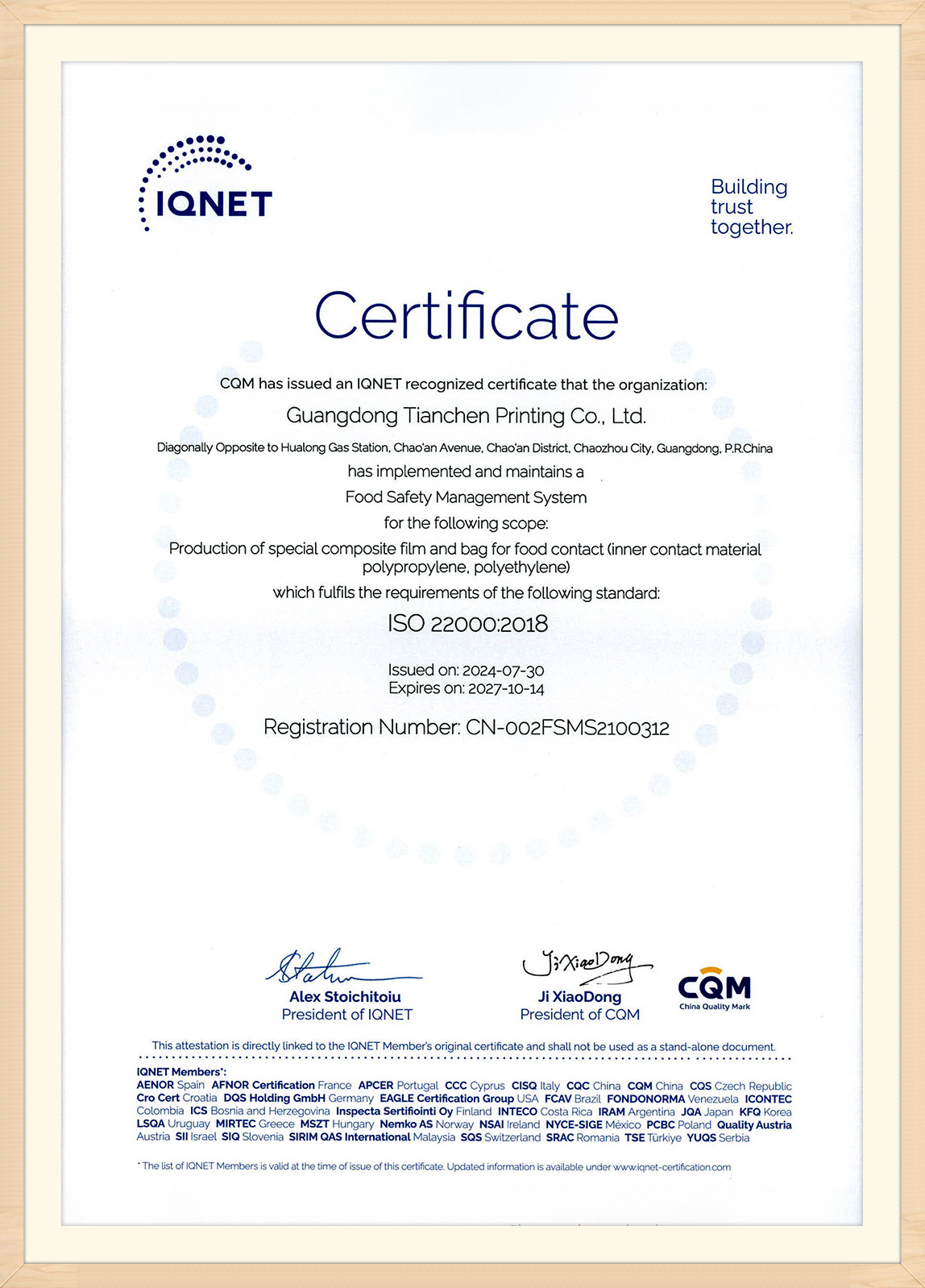
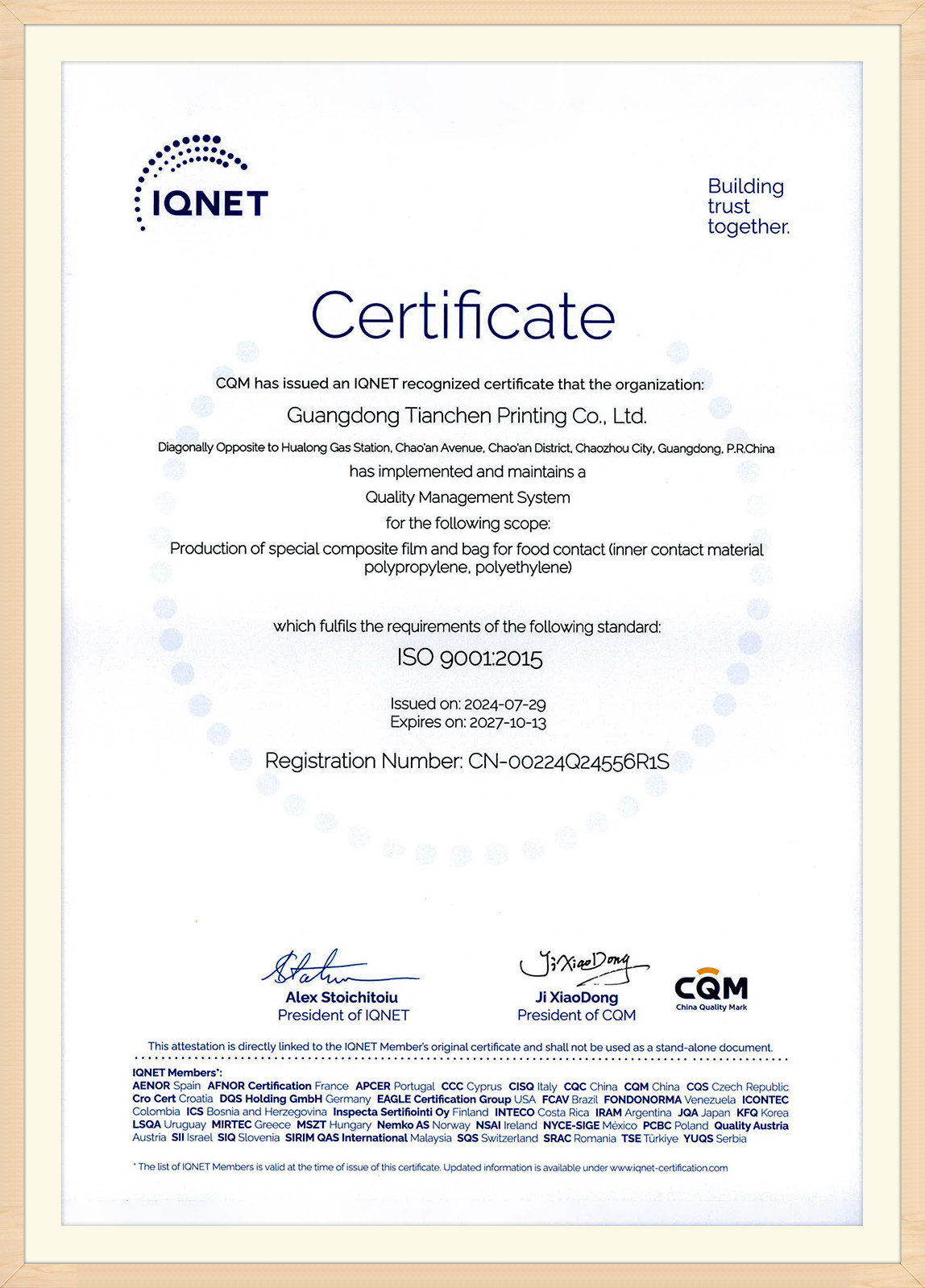
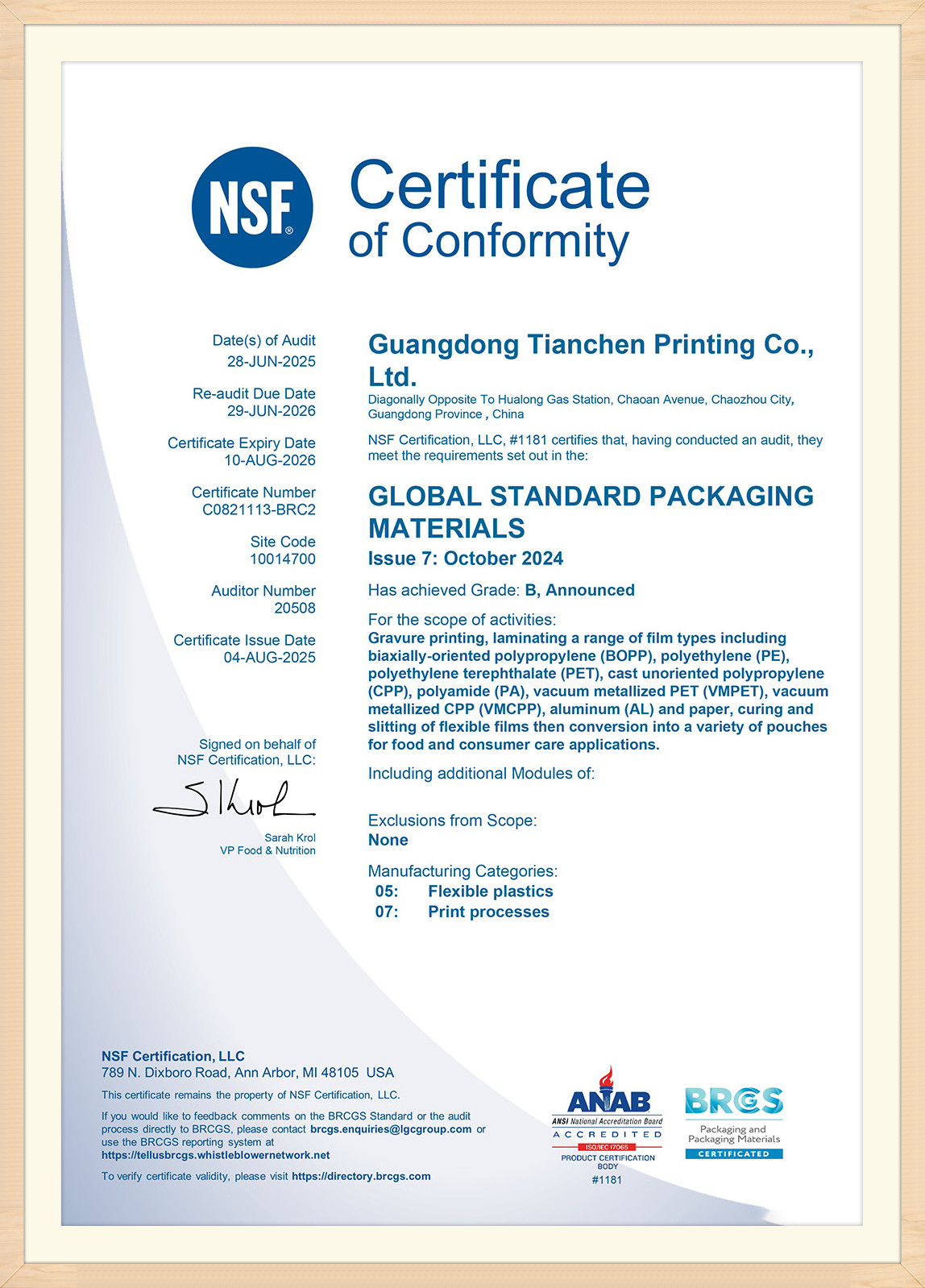
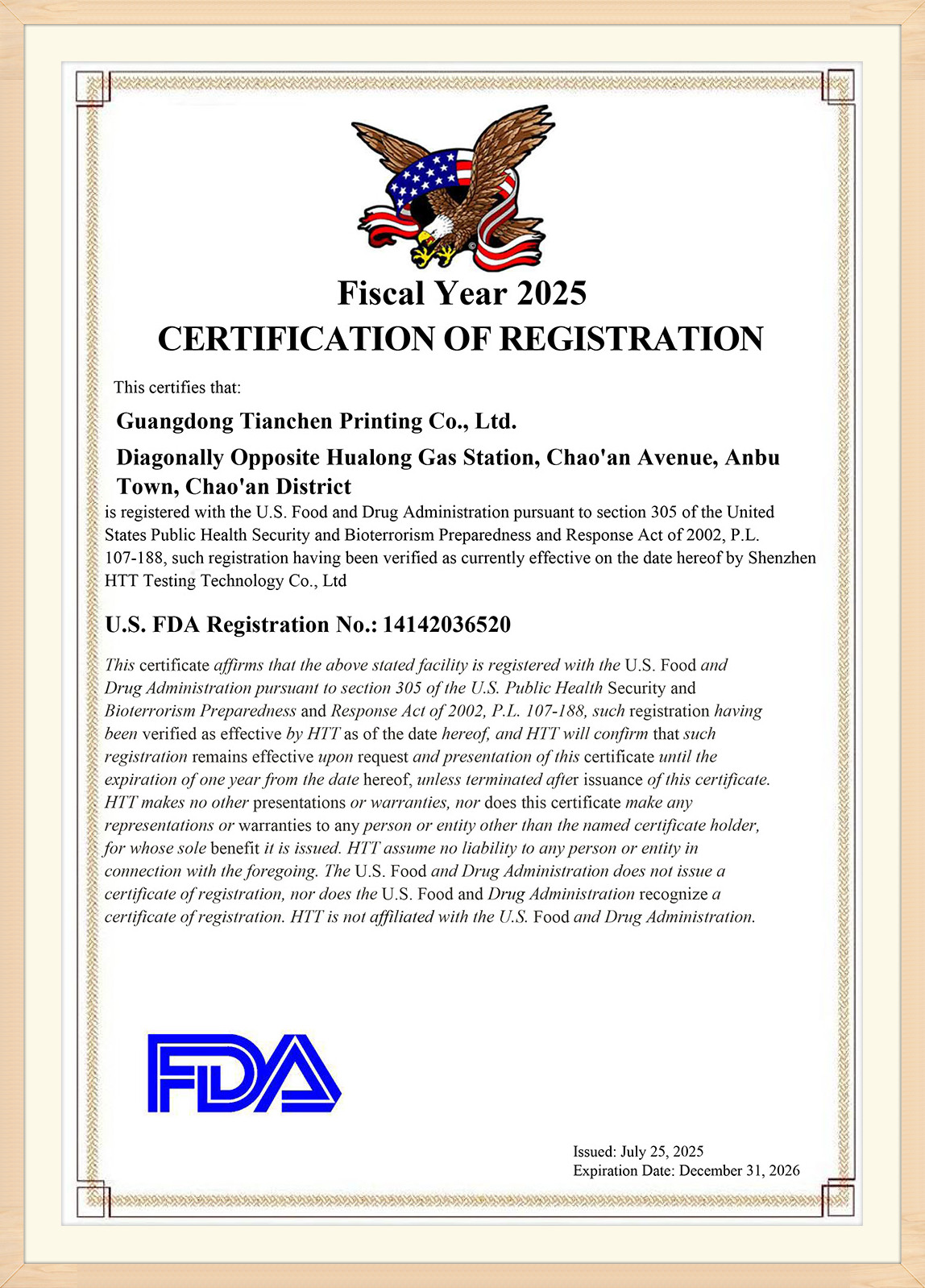
Verifiable compliance with international standards, ensuring food-grade safety, manufacturing quality, and global trade compliance.
Quality control at Guangdong Tianchen Printing is supported by formal certifications. We implement strict HACCP principles and GMP facility protocols, keeping our processes aligned with the expectations of top-tier global food, pharmaceutical, and consumer brands.
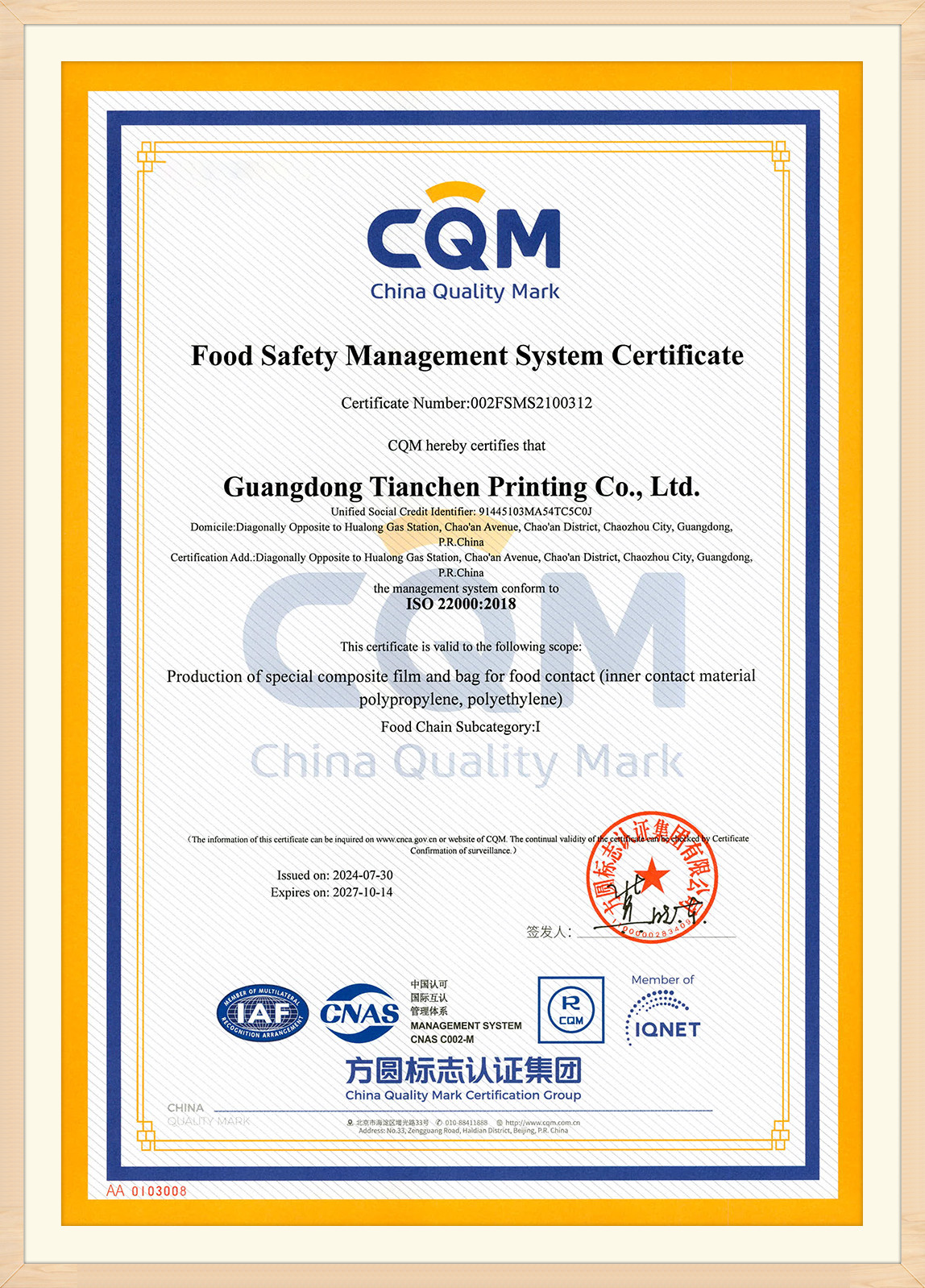
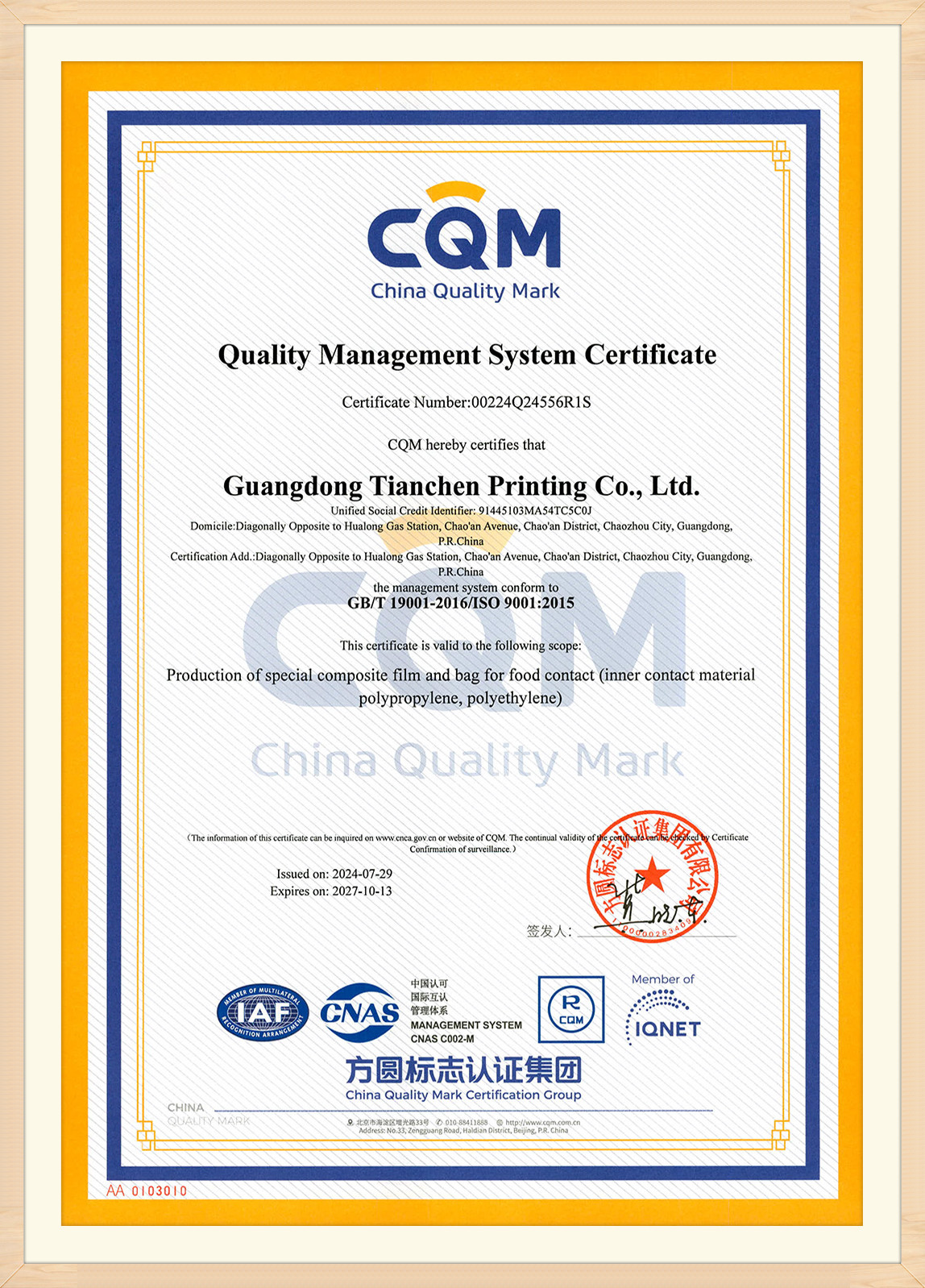
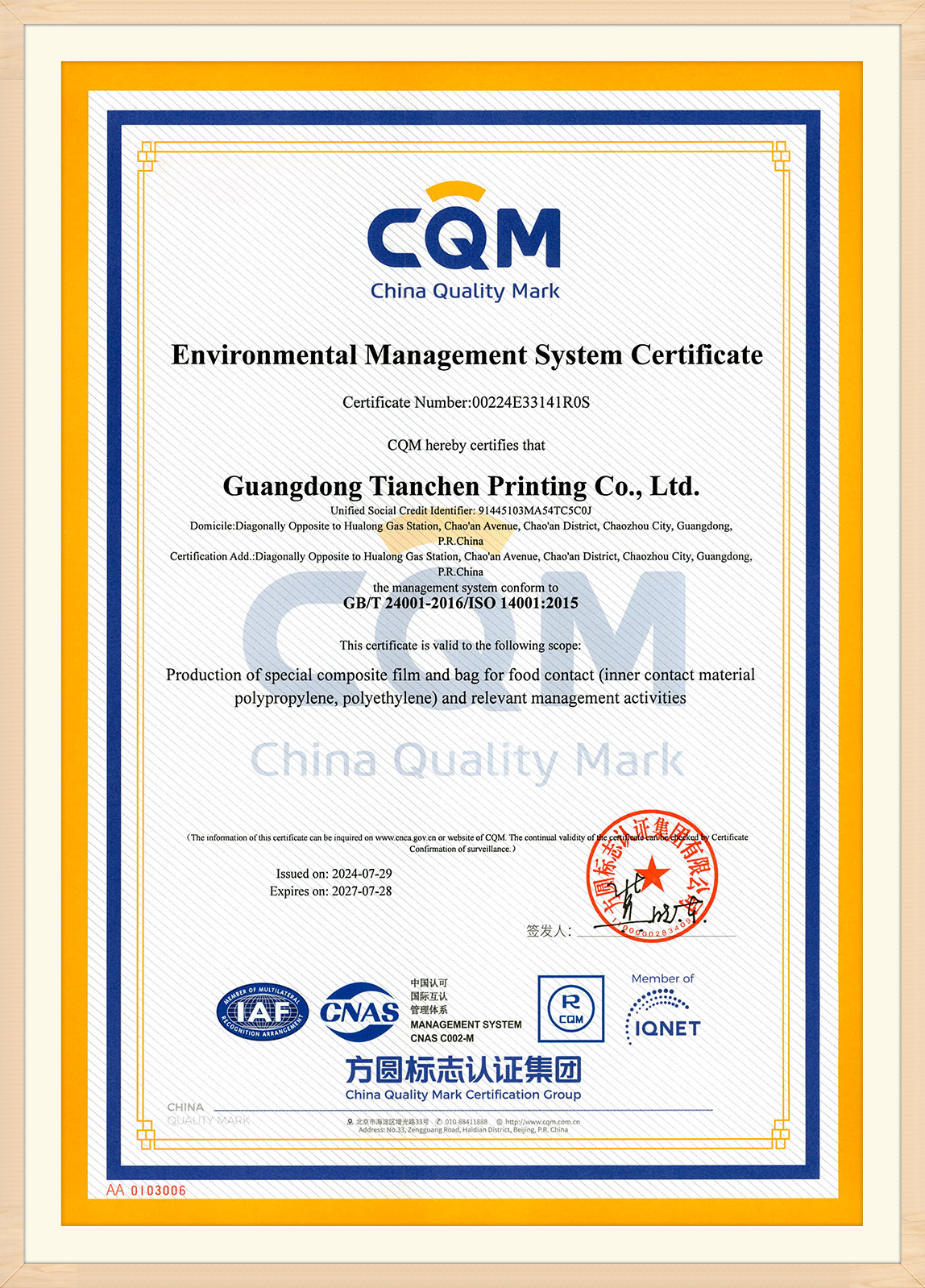
Moving from initial graphic design to final laminated rolls or pre-formed pouches requires careful technical coordination. Guangdong Tianchen Printing coordinates this process through a unified project management system.
When a client submits their design assets, our prepress engineering team reviews the color channels, barcode readability, and text resolution to optimize the layout for rotogravure cylinders. Once the artwork is approved, cylinder engraving and film printing proceed on high-speed lines.
Lamination parameters—such as adhesive application weights, oven temperatures, and web tension—are adjusted depending on the film structure. Extruded layers are allowed to cure in temperature-controlled rooms to ensure optimal bond strength and low residual solvents. Finished webs are then slit or converted into pouches, undergoing final quality tests before shipping.
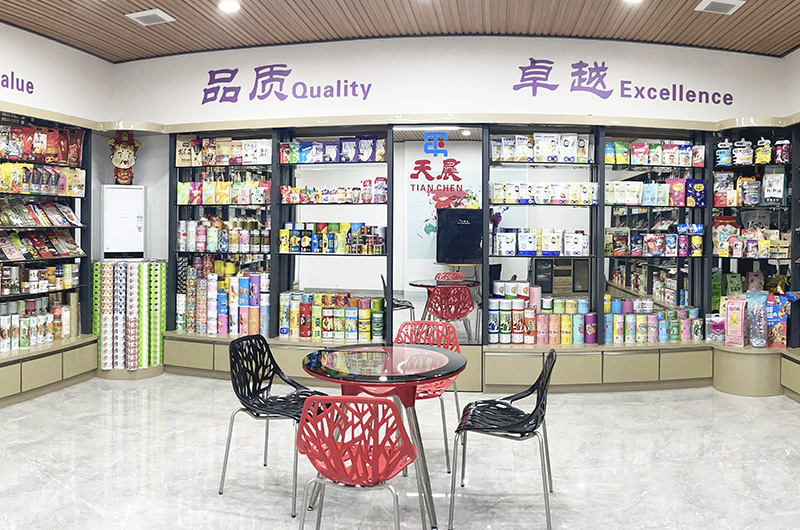
Common questions from global procurement officers, quality control teams, and brand managers regarding manufacturing and standards.
Explore our specialized range of high-barrier packaging, from chemical-resistant bags to recyclable aluminum foil alternatives.
 TIANCHEN PRINTING